
If you’re struggling with both substance use and your mental health, you may have what’s called a dual diagnosis. Many women live with this for years without knowing that both problems can, and should, be treated together. And for many women, healing happens best in a space built just for them.
Below are seven key signs that a women-only dual diagnosis program may be the right next step for you or someone you love.
What Is Dual Diagnosis?
Dual diagnosis means a person has a substance use disorder and a mental health condition at the same time. You may also hear it called co-occurring disorders. Common pairings include alcohol use with depression, opioid use with PTSD, or stimulant use with anxiety.
The two conditions feed each other. Anxiety or trauma can lead to drinking or drug use to cope, and substance use can make mental health symptoms worse. That’s why dual diagnosis treatment addresses both at once, instead of one after the other.
Why Women’s Needs Are Different
Research shows women often experience addiction differently than men. According to the National Institute on Drug Abuse, women tend to move faster from first use to dependence. They often enter treatment with more severe medical, psychological, and social problems. Women also face unique barriers, like caring for children and fear of losing custody.
Mental health plays a role too. The National Institute of Mental Health notes that some conditions, such as depression and anxiety, affect women in distinct ways. A women-only dual diagnosis program is designed with all of this in mind.
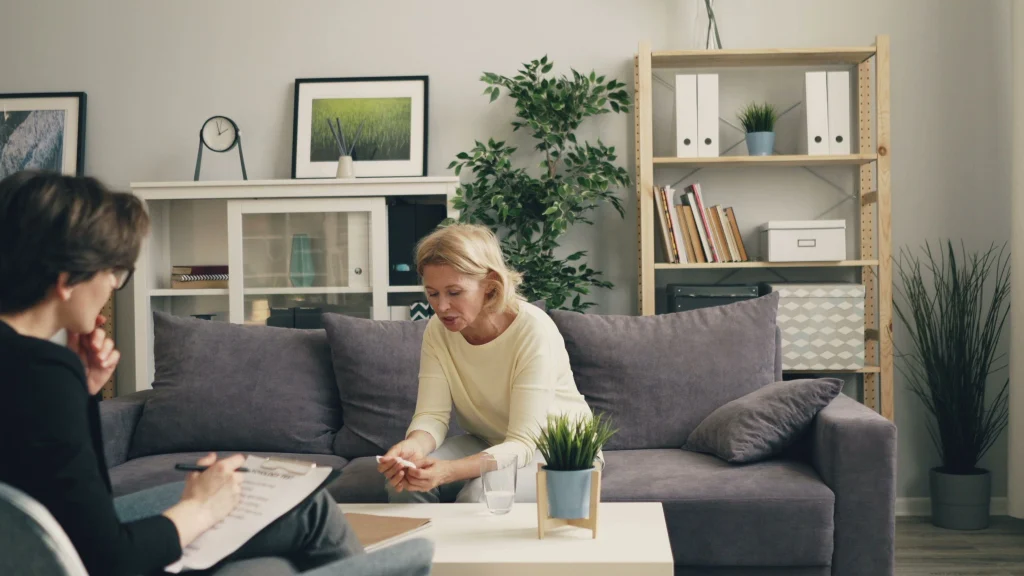
7 Key Signs You Need a Women-Only Dual Diagnosis Program
1. You Use Alcohol or Drugs to Cope With Your Emotions
Do you reach for a drink when anxiety spikes? Use pills to quiet racing thoughts or numb sadness? Using substances to manage emotions is one of the clearest signs of a dual diagnosis. It may bring short-term relief, but over time it deepens both the addiction and the mental health condition.
2. You’ve Tried Treatment Before, but It Didn’t Last
Many women go through rehab that focuses only on substance use. Once they leave, untreated depression, anxiety, or trauma pulls them back toward using. If you’ve relapsed after treatment, it may be because only half of the problem was addressed. Dual diagnosis care treats both conditions together.
3. You Have a History of Trauma, Abuse, or Domestic Violence
Trauma and addiction are closely linked, and many women in recovery have experienced physical, sexual, or emotional abuse. A women-only program with trauma therapy offers a safer space to work through painful experiences without fear or judgment.
4. You Don’t Feel Safe Opening Up in Mixed-Gender Groups
It can be hard to talk about abuse, relationships, sexuality, or body image with men in the room. If you hold back in mixed groups, you may not get the full benefit of therapy. Women-only groups often make it easier to be honest and build trust.
Do any of these signs sound familiar? You don’t have to figure it out alone. Call Hatch Behavioral Health at (714) 942-4742 or contact our admissions team to talk about your options today.
5. Your Mental Health Gets Worse When You Use or Try to Stop
You may notice deeper depression after drinking, panic attacks during a comedown, or mood swings when you try to cut back. When mental health symptoms and substance use rise and fall together, it’s a strong sign they need to be treated as one connected issue.
6. You’re Balancing Motherhood or Caregiving
Women often carry the weight of caring for children, partners, or aging parents. Fear of losing custody or simply not having time can keep women from getting help. A program built for women understands these pressures and can help you plan treatment around your life.
7. Shame, Body Image, or Relationships Are Tied to Your Use
For many women, substance use is wrapped up in feelings of shame, struggles with body image, or unhealthy relationships. These issues are hard to unpack in a general program. A women-only setting makes room for these conversations, so you can heal at the root.
Benefits of a Women-Only Dual Diagnosis Program
A women-only dual diagnosis program offers more than a separate group room. It’s built around the ways women experience addiction, mental health, and recovery.
- A safer space. Many women feel more comfortable sharing openly with other women.
- Trauma-informed care. Therapy is designed to help women process trauma without being retraumatized.
- Focus on women’s issues. Groups can explore topics like motherhood, body image, relationships, and identity.
- Peer support. Bonds with other women in recovery can last well beyond treatment.
- Integrated treatment. Mental health and substance use are treated together by one coordinated team.
Women-Only Dual Diagnosis Treatment at Hatch Behavioral Health
Hatch Behavioral Health in Anaheim, California, offers a dual diagnosis program designed exclusively for women. Our licensed therapists, psychiatrists, and case managers create a treatment plan around your goals and diagnoses.
Treatment may include:
- Cognitive Behavioral Therapy (CBT) and Dialectical Behavior Therapy (DBT)
- Individual, group, and family therapy
- Trauma-informed care
- Psychiatric evaluations and on-site medication management
- Medication-assisted treatment (MAT) for opioid or alcohol addiction
- Holistic practices like mindfulness and creative expression
- Relapse prevention and aftercare planning
We treat co-occurring conditions such as depression, anxiety, PTSD, bipolar disorder, and personality disorders alongside alcohol, opioid, and other substance use. Care is available through our partial hospitalization (PHP), intensive outpatient (IOP), and outpatient programs, so you can find the level of support that fits your life. Hatch accepts most PPO insurance plans, and you can verify your insurance online.
Frequently Asked Questions About Dual Diagnosis
What is a dual diagnosis?
A dual diagnosis is when someone has both a substance use disorder and a mental health condition, such as depression, anxiety, or PTSD. Both conditions are treated at the same time.
Why choose a women-only dual diagnosis program?
Women-only programs offer a safer, more supportive space to talk about trauma, relationships, motherhood, and other issues that affect women’s recovery.
Do I need to stop using before I start dual diagnosis treatment?
Not always. Depending on your needs, you may need detox first. Our admissions team can help you figure out the right starting point.
Can I keep working or caring for my kids during treatment?
Outpatient options like IOP let you live at home or in sober living while attending treatment several days a week.
Does insurance cover dual diagnosis treatment?
Many insurance plans cover dual diagnosis care. Hatch accepts most PPO plans. Contact us to check your benefits.
Take the First Step Toward Healing
If you saw yourself in these signs, you deserve care that treats the whole you. At Hatch Behavioral Health, our women-only dual diagnosis program gives you the safety, support, and tools to heal from addiction and mental health struggles together.
Call our admissions team at (714) 942-4742 or contact us online today. Your call is confidential, and a new chapter can start now.
If you are in crisis or thinking about harming yourself, call or text 988 to reach the Suicide & Crisis Lifeline.